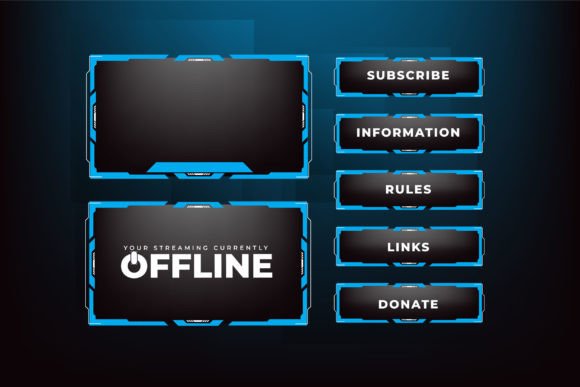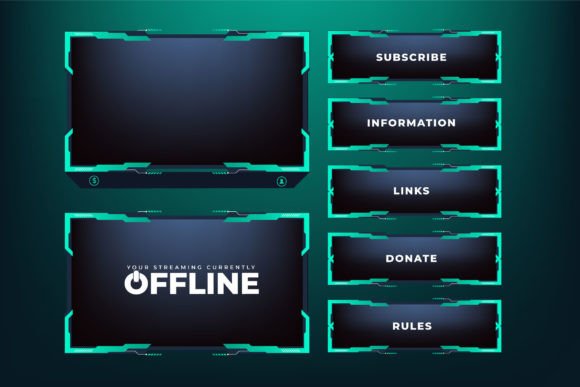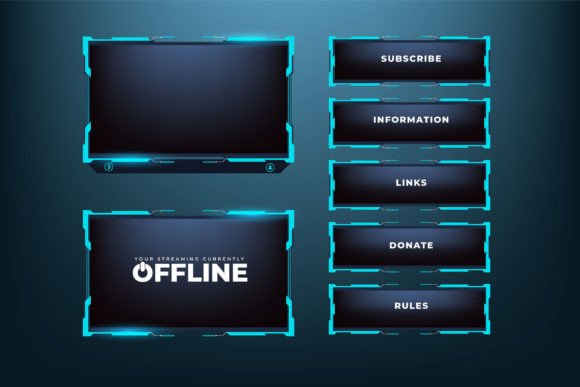
Gaming Overlay Vector Element Design
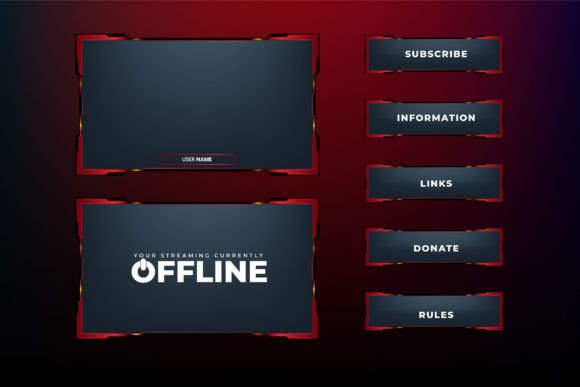
Digital broadcasts thrive on split seconds of attention. A streamer’s screen is never just gameplay; it is a layered composition of webcam frames, chat boxes, alert animations, and brand markers. The visual glue holding those pieces together often comes from a carefully built gaming overlay vector element design. These are editable vector files that give a broadcast that polished, futuristic edge without forcing you to build every border, panel, and shape from scratch. When you find a resource like the dark streaming overlay design with blood red color borders, you are looking at a ready-to-use visual framework built for screen panels, facecam windows, and informational blocks that feel fast, high tech, and cohesive.
What Exactly Is a Gaming Overlay Vector Element Design?
At its simplest, a gaming overlay vector element design is a collection of scalable graphic pieces saved in formats like AI, EPS, or SVG. These pieces form the borders, dividers, background panels, and decorative accents that sit on top of a live broadcast or video recording. Because they are vector-based, they can be resized endlessly without losing sharpness, stretched to fit an ultra wide monitor, scaled down for a mobile stream, or recolored to match a different brand palette.
The blood red border treatment found in one particular set gives an aggressive, futuristic feel. Thin glowing lines, angled digital shapes, and high-contrast edges make interface panels look like they belong inside a combat simulator or a cyberpunk cockpit. Designers and streamers who want a cohesive on-screen identity often start with a base like this and then tweak colors, add logos, or rearrange elements to fit their exact layout.
Why Different People Care About Vector Overlays
The same gaming overlay vector element design can mean very different things depending on who picks it up. A beginner streamer might simply want a fast way to look professional without spending hours learning graphic software. A freelance designer may see it as a time-saving foundation to customize for several clients. A small business owner who runs live product demos might adapt the dark, blood-red aesthetic to give a webinar a gaming edge that holds viewer curiosity.
Educators and tutorial creators sometimes use overlay frames to separate their webcam from code blocks or slide decks. The digital shapes give them clean visual boundaries. For a creative hobbyist, modifying the file is the whole point — tracing paths, adding gradients, and playing with the vector structure to learn how advanced screen graphics are built.
Priorities Shift Depending on the User
- Ease of use: A complete beginner will look for a set that opens in common vector software and is well-organized in clearly named layers. A file that needs minimal effort to drag and drop is ideal.
- Quality and flexibility: Experienced designers care about anchor points, clean paths, and whether the blood red elements are separate from the dark panels so they can isolate and recolor everything smoothly.
- Speed and reliability: A full-time streamer might need a design that stays crisp at different bitrates and blends correctly with OBS transparency settings without flickering.
- Commercial value: Someone who creates overlay packs for clients will evaluate how easily the base design can be adapted into multiple variations while keeping a consistent style.
- Learning value: An educator or self-taught designer may examine the file not just to use it but to study how the futuristic screen panel elements are constructed.
Practical Examples Across Skill Levels
Imagine someone hosting a weekly charity stream. They have limited time to prepare graphics. Using a gaming overlay vector element design that already includes a dark streaming panel, a facecam border, and alert box frames means they only need to drop the pieces into their broadcasting software, adjust sizes, and maybe add their logo. The futuristic look is already there.
A professional designer might start with the same blood red bordered frame and reshape it into a full broadcast package: a starting soon screen, a BRB intermission, and an after-show credit panel. Because the file is vector, they can isolate the digital shapes and extend lines into new layout arrangements without sacrificing consistency.
A content creator who makes YouTube tutorials could use the panel elements to frame on-screen text boxes or highlight key button combinations. The crisp edges and glowing red accents help separate information from background footage, making the video easier to follow even on smaller screens.
How to Match the Design to Your Own Goals
Before downloading any overlay file, ask what you actually need the design to do. If your broadcast is calm and minimalist, a blood red, futuristic panel may overwhelm your aesthetic. If you run high-intensity competitive gaming streams, that same aggressive color scheme might fit perfectly. The dark background of this particular streaming overlay keeps attention on the bright game visuals while the red borders create urgency and motion cues at the edges of sections.
Your skill level with vector editing also matters. You should be comfortable opening a ZIP file, extracting vector files, and navigating something like Adobe Illustrator. The file set mentioned here is compressed for safe transfer, and you must use tools such as WinZIP, WinRAR, or a direct double-click on your operating system to extract the contents. Once open, the vector and JPG formats give you both a high-quality editable source and a quick preview reference.
Signs That This Specific Overlay Design Works for You
- You need a ready-made futuristic screen panel that doesn’t require building every geometric border by hand.
- You want to modify the design, not just use it as-is. The vector format lets you change blood red to a different accent color or adjust panel transparency.
- You value a dark, low-light streaming overlay that won’t distract from gameplay but still adds a professional framing effect.
- You plan to use the graphics commercially, for client projects, because you can legally adapt vector files for multiple purposes (always verify the license terms).
- You appreciate having a layered file so you can turn off certain digital shapes or rearrange the panel composition.
Inside the ZIP: What to Expect
When you acquire a gaming overlay vector element design like the futuristic screen pack with blood red details, the delivery usually includes a compressed archive. After extracting, you will find the original vector file — often an AI or EPS — and an accompanying JPG preview. The vector file contains all editable layers, paths, and color fills. The JPG gives you a flat image you can use immediately for quick placement tests in OBS Studio, Streamlabs, or any broadcasting software.
Because the files are vector, you can open them in Adobe Illustrator or free alternatives like Inkscape. The design should already be organized into logical groups: perhaps a base dark panel, the red glowing border, inner digital grid lines, and separate accent shapes. Having those groups intact makes your own edits faster. If you are new to vector work, start by simply recoloring the red accents to match your brand, then gradually try moving or duplicating elements.
Adapting the Design for Different Broadcast Layouts
Many people think overlays are only for gamers, but these visual elements serve any live video where information overlays matter. You might use the dark streaming overlay panels to frame a fundraising tracker, a subscriber goal bar, or a live Q&A text zone. The futuristic digital shapes can become separators between discussion points during a live podcast recording. Even online teachers running live coding streams can benefit from a semi-transparent screen panel that holds the lesson title and current topic while their camera sits nestled inside a blood red rimmed window.
To adapt, open the vector file, select the elements you need, and copy them into a new artboard set to your streaming canvas resolution. You can resize the panel without losing quality to fit exactly around your webcam rectangle or to become a taller info column on the left side of the screen. The blood red borders naturally draw the eye, so placing critical call-to-action elements near those red edges can subtly guide viewer attention.
Common Modifications That Add Value Over Time
Investing time in learning how to modify a gaming overlay vector element design pays off long after the first use. Once you understand how the paths are built, you can create alternating color schemes for different seasons, switch the dark theme to a light variant for daytime streams, or animate individual parts of the overlay inside your streaming software by importing separate pieces. Many streamers start with a static panel and later slice it up to make animated transitions or progressive reveals.
Since the design comes from a store like Ifti Digital Graphic Store, it arrives as a finished creative asset, not a tutorial project. That means you can use it immediately or learn from its construction. The blood red borders and futuristic screen elements are not just decorations; they are a lesson in how professional overlays balance intensity with negative space so that gameplay remains visible and readable.
Avoiding Common Pitfalls
One mistake newcomers make is assuming a dark overlay will always look good on any game. Before finalizing, test the panel transparency and edge glow against bright, mid-tone, and very dark gameplay backgrounds. The blood red details might bleed into a similarly colored game environment. Simple fixes include lowering element opacity or adding a subtle dark backing layer to separate the overlay from the in-game action. The vector format makes such tweaks painless because you can adjust individual fills and strokes without affecting the rest of the design.
Another consideration is file compatibility. While the vector file is flexible, always confirm your editing application supports the version. If you run into trouble modifying the design, reaching out to the creator — as mentioned, you should not hesitate to contact the designer if problems arise — can save hours of troubleshooting. Often, a file that seems broken simply needs to be opened with the correct import settings.
Long-Term Usefulness Beyond a Single Stream
A well-crafted gaming overlay vector element design becomes a reusable library. The dark streaming panel can shift from a Twitch overlay to a YouTube video intro frame. The digital shape accents might find their way into social media banner templates or thumbnail backdrops. Because you can extract, modify, and re-export the vector as PNG with transparency, the asset never degrades. The blood red border you use today for a tournament could be recolored teal next month for a charity event without losing any edge sharpness.
For small business owners who present live product launches or interactive webinars, borrowing from a gaming aesthetic signals energy and modernity. The futuristic screen panel style creates urgency and excitement, but it must still leave room for readable text, highlighted product shots, and clear navigation. Using the vector elements selectively lets you keep the energy without overwhelming the message.
In the end, a gaming overlay vector element design is more than a decorative frame. It is a structural tool that organizes on-screen information, supports brand identity, and adapts as your content evolves. Whether you are a first-time streamer dragging a JPG preview into OBS or a seasoned designer dissecting complex path work in Illustrator, the same blood red, dark-themed pack can meet you where you are. The key is to match the design’s bold, futuristic nature to a layout that amplifies your content rather than distracting from it.