Understanding the Gaming Sticker Boss Fight Design and Its Place in Creative Projects
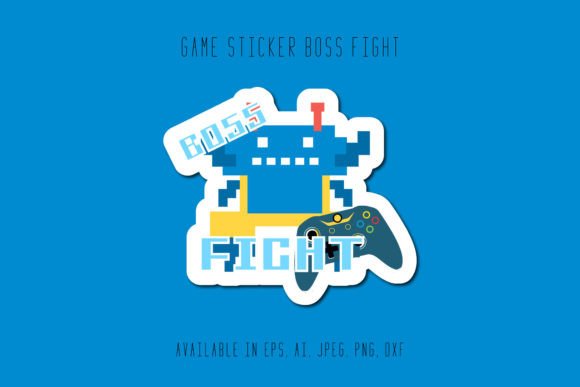
When you browse digital marketplaces for gaming-inspired artwork, the term Gaming Sticker Boss Fight often appears as a product title that sparks curiosity. At its core, this is a downloadable design asset built around a boss battle theme—a visual concept that draws from video game culture, where players face off against oversized, powerful enemies. The product typically includes a stylized illustration or typography-driven composition centered on that climactic moment of confrontation. What makes it distinct is not just the subject matter, but the practical way it is packaged for creators who need ready-to-use artwork in multiple file formats.
The bundle usually arrives with six format files—AI, EPS, SVG, DXF, JPG, and PNG—all sized at 1920 pixels by 1280 pixels. This canvas size offers a landscape orientation that works well for stickers, prints, and digital overlays without feeling cramped. Having vector files like AI, EPS, and SVG means you can scale the design without losing sharpness, while the DXF format opens doors for cutting machines and physical crafting. The raster formats, JPG and PNG, handle quick placement and web use. For anyone who has struggled with file compatibility, this multi-format approach removes a significant barrier to getting started.
How the Gaming Sticker Boss Fight Concept Fits Into Different Creative Workflows
Designers and hobbyists often look for assets that can flex across different tools and platforms. The Gaming Sticker Boss Fight design is positioned to serve multiple workflows precisely because of its format variety. If you work in Adobe Illustrator or CorelDRAW, the AI and EPS files give you full vector editing control—you can change colors, adjust line weights, or isolate elements for custom compositions. SVG files have become increasingly important for web developers and Cricut users alike, making this design usable for everything from website graphics to heat-transfer vinyl projects.
There is a practical convenience in receiving both vector and raster versions in a single purchase. You avoid the tedious process of converting files or tracing bitmap images into vectors, which rarely produces clean results without manual cleanup. The 1920px by 1280px dimensions provide enough resolution for high-quality prints at smaller sizes, though anyone planning large-format banners or posters should test scaling carefully, as the raster files will have limits that the vector files do not.
Evaluating Strengths and Tradeoffs Compared to Custom Commissioned Artwork
One natural comparison point is custom artwork commissioned from a freelance illustrator. A bespoke boss fight illustration might capture a specific character, color palette, or mood that perfectly matches your project. However, custom work involves higher cost, longer turnaround, and back-and-forth communication that not every project timeline can accommodate. The Gaming Sticker Boss Fight design offers an immediate, affordable alternative—you download the files and start working within minutes.
The tradeoff is uniqueness. Because this is a commercially available design, other creators may use the same artwork in their own products or promotions. If your brand depends on one-of-a-kind visuals, a stock design might not align with that goal. On the other hand, for personal projects, small-scale merchandise, or internal team materials, the lack of exclusivity rarely matters. The design quality and editing flexibility can still make it a smart choice when speed and budget carry more weight than absolute originality.
Comparing Pre-Made Designs to DIY Creation for Sticker Projects
Some creators prefer to build their own boss fight illustrations from scratch using Procreate, Photoshop, or Affinity Designer. That path gives complete creative control and a sense of ownership over every pixel. It also demands significant time, intermediate-to-advanced drawing skills, and a solid understanding of composition and typography for gaming-themed art. The Gaming Sticker Boss Fight product shifts that equation. You trade hands-on creation for a professionally composed starting point that you can then modify, combine with other elements, or use as-is.
For someone who needs a sticker design for a gaming event, a small apparel run, or a content creator’s giveaway, the pre-made option removes the creative bottleneck. The vector files allow you to recolor and rearrange components, so you are not locked into the exact appearance of the preview image. However, if you want to express a very specific visual idea—like a boss character that matches your personal brand or mascot—building from scratch or commissioning an artist may produce better long-term results.
Format Considerations: When Multiple File Types Matter Most
One detail that separates this product from simpler digital downloads is the inclusion of DXF format. DXF files are widely used in CAD software and cutting machine applications, such as laser engravers, CNC routers, and vinyl cutters. If your goal is to produce physical decals, etched metal signs, or layered wood art, the DXF file saves you from having to manually convert vector artwork—a step that often introduces scaling errors or path complications. For print-on-demand sellers, the PNG file with transparency is ready to drop onto t-shirt mockups or product templates without background removal.
There is a practical limitation worth noting: the fixed 1920px by 1280px canvas size means raster files have a defined ceiling for print dimensions. At 300 DPI, that translates to roughly 6.4 inches by 4.3 inches—fine for most stickers, phone cases, or patches, but potentially restrictive for poster-sized prints. The vector files do not have this constraint, so understanding which format to use for which scenario becomes part of the decision-making process.
Identifying Best-Fit Use Cases for the Gaming Sticker Boss Fight Design
This design tends to work well in specific situations. Content creators who stream retro or indie games might use the artwork for channel badges, overlay elements, or subscriber emotes. Small merchandise sellers can apply the design to sticker packs, enamel pin concepts, or apparel graphics without needing an in-house illustrator. Crafters with Cricut or Silhouette machines will find the SVG and DXF files immediately compatible for producing physical decals.
In educational or community settings, the design can serve as promotional material for gaming clubs, tournament brackets, or event signage. Because the files are editable, organizers can add text layers with event details, sponsor names, or scheduling information without rebuilding the artwork. The wide format ratio also suits horizontal banners and social media headers better than square compositions might.
When to Look Beyond a Single Design Purchase
There are clearly situations where the Gaming Sticker Boss Fight design may not be the best fit. If your project requires a complete brand identity system with matching icons, patterns, and alternate colorways, a single illustration will only cover a fraction of that need. Brand designers often build cohesive visual systems from the ground up, and a standalone sticker design cannot replicate that scope.
Similarly, commercial projects that need exclusive licensing should verify the product’s terms. Many digital design products come with standard commercial licenses that allow limited physical and digital sales, but they may restrict use in trademarked logos or large-scale reproduction. Reviewing the license details before purchasing prevents complications down the line. If exclusivity and unrestricted usage are non-negotiable, commissioning original work remains the safer route.
Assessing Compatibility With Editing Software and Hardware
Compatibility is a practical factor that influences how useful any design asset truly becomes. The Gaming Sticker Boss Fight package covers a broad spectrum—Adobe Illustrator handles AI and EPS, free tools like Inkscape open SVG files, and most image editors support JPG and PNG without issue. The DXF format works with AutoCAD, LibreCAD, and programs like LightBurn for laser engraving. For users who rely on mobile apps or browser-based editors, the SVG and PNG files tend to offer the smoothest experience.
Testing the files across different software versions is advisable. Older graphic design programs may struggle with newer AI or EPS formatting, though this is becoming less common. The SVG format, being an open standard, typically behaves consistently across platforms. If you plan to use the design predominantly for cutting machine projects, opening the SVG or DXF in your machine’s design software before committing to a production run helps catch any path issues early.
Understanding the Value Proposition for Different Types of Buyers
For a creator who needs a polished gaming-themed visual quickly, the multi-format bundle represents a time-efficient solution. The cost per usable file format is low, and having both editable source files and ready-to-use exports covers spontaneous needs—like generating a last-minute sticker design for a local event—without jumping between conversion tools.
Experienced designers who already have extensive toolsets might view this purchase differently. They may evaluate whether they can recreate a similar boss fight concept in less time than it takes to download, unzip, and customize the purchased file. If their skills and available hours make custom creation faster than adapting existing work, a pre-made design holds less appeal. For those with lighter design experience or tighter deadlines, the equation leans the other direction.
Practical Comparisons With Free and Lower-Cost Alternatives
Free vector repositories and community art platforms offer gaming-themed artwork at no cost, though quality, licensing clarity, and file consistency vary widely. Many free options come with attribution requirements or restrict commercial use entirely. The Gaming Sticker Boss Fight product occupies a middle ground—it is more reliable than hunting for free assets with unclear origins, yet more affordable than commissioning an artist.
Lower-cost design bundles from large marketplaces might include dozens of gaming illustrations for a similar price. Quality versus quantity becomes the differentiator. A single well-crafted boss fight design with clean paths, smart layering, and editable text elements can outperform a dozen mediocre graphics that need significant rework. Examining preview images closely and reading product descriptions helps gauge whether the attention to detail matches your standards.
Making a Decision Based on Project Requirements and Constraints
Choosing whether to purchase this design ultimately comes down to four factors: time available, skill level, budget, and uniqueness needs. If you need a gaming sticker design today, lack advanced illustration skills, have a modest budget, and are comfortable using a non-exclusive asset, the Gaming Sticker Boss Fight fits neatly into that intersection. If any of those factors shifts significantly—perhaps you have two weeks to work and a clear vision for something completely original—alternative paths become more attractive.
Considering how the design will actually be used clarifies the decision. A physical sticker sheet sold at a convention table benefits from a well-balanced composition and clean cut lines, both of which a pre-made design can provide. A flagship logo representing a game development studio for years to come demands a level of custom tailoring that only original work can deliver. Mapping the use case to the product’s strengths prevents mismatched expectations.
The careful packaging of formats, the themed artwork itself, and the ready-to-use nature of the download make this type of product a practical resource for many creators. Understanding its scope, limitations, and ideal applications allows for a grounded purchase decision rather than one driven by impulse or marketing language alone.