Live Gaming Screen Interface Design
Every split-second counts when you’re live. The energy, the chat, the action—all competing for screen real estate. That’s why Live Gaming Screen Interface Design isn’t just decoration; it’s the visual nerve center of your broadcast. A well-crafted overlay does more than look sleek. It organizes information, reinforces your brand, and keeps viewers glued to the stream without ever distracting from the gameplay itself. As streaming becomes more crowded, the difference between a forgettable channel and a professional broadcast often comes down to the thought poured into those pixel-perfect panels.
For graphic designers and content creators, mastering live gaming screen interface design means understanding how to balance bold personality with rock-solid usability. Every element—from the webcam frame to the alert box—must work together in a system that’s both beautiful and instantly readable on screens of all sizes.
Why Live Gaming Screen Interface Design Matters for Modern Streamers
In a landscape where millions of streamers fight for attention, your on-screen presentation is your handshake. It tells viewers who you are before you even speak. A consistent live gaming screen interface design builds trust through visual hierarchy. When your name, social handles, recent subscriber, and donation goals are placed with care, the audience can process information effortlessly. More importantly, a cohesive overlay elevates your brand from casual hobbyist to professional creator. Sponsors and partners notice the polish. They see that you value your own content enough to invest in its visual identity, and that makes you a safer bet for collaboration.
The best live gaming screen interface designs function like a magazine layout: guiding the eye naturally to the most important elements first. Gameplay dominates the center; chat and alerts sit in the periphery; webcam frames become part of the aesthetic rather than a floating afterthought. Achieving this requires a deep understanding of visual weight, negative space, and accessibility.
Key Elements That Define a Strong Screen Overlay
Working with live gaming screen interface design means juggling multiple components without letting any single piece feel chaotic. Here are the essentials:
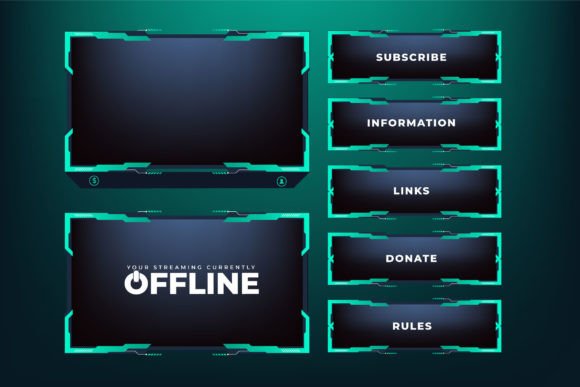
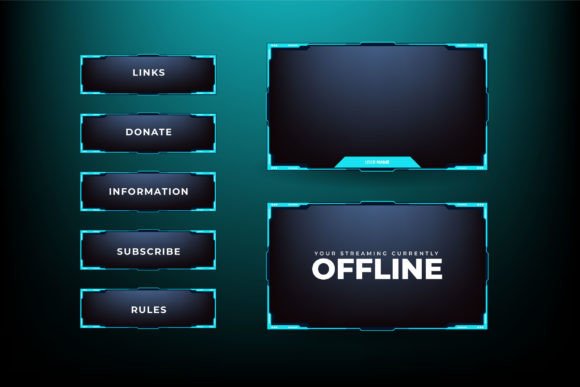
- Webcam Frame: Shapes your face within the scene. Clean, minimal borders keep the focus on you while blending with the overall theme.
- Alert Box Graphics: Pop-ups for follows, subs, and donations. They must grab attention quickly and vanish gracefully—animation timing is as important as the static design.
- Info Panels: Event lists, top donors, current song, or stream countdowns. These small rectangles must be legible even at 50% scaling.
- Background Loops & Overlays: Subtle motion adds depth. A dark, blue-toned geometric animation behind a semi-transparent panel can create a high-tech vibe without competing with the main content.
- Typography: Bold, readable fonts are essential. Avoid overly decorative typefaces that blur when compressed by streaming bitrates.
The magic happens when all these pieces share a unified color palette. Dark themes with cool blue accents are a streaming staple for good reason: they reduce eye strain during long sessions, provide excellent contrast for bright game visuals, and carry a tech-forward, trustworthy mood that suits everything from esports broadcasts to casual late-night streams.
Using Simple Shapes and Vector Simplicity in Your Layouts
Simplicity is a superpower in live gaming screen interface design. Clean geometric panels—rectangles, rounded corners, subtle diagonal cuts—offer a modern aesthetic that never feels dated. Vector-based designs shine here because they scale without losing sharpness, whether you’re streaming at 720p or 4K. A live gaming screen panel design vector with simple shapes allows you to resize, recolor, and adapt every element on the fly without ever degrading quality.
Minimalist overlays also reduce visual noise. When gameplay is chaotic, a busy border full of gradients and drop shadows can overwhelm the eye. A straightforward vector panel sets clear boundaries, frames information neatly, and lets the action breathe. This approach aligns with broader UI/UX principles used in web and app design, proving that restraint often communicates confidence better than excess.
From Screen to Brand: The Bigger Picture of Stream Graphics
A live gaming screen interface design never lives in isolation. It’s part of a larger brand ecosystem that includes social media graphics, YouTube thumbnails, merchandise, and offline banners. Consistency across these touchpoints makes your content instantly recognizable. For instance, the same dark blue panel style and geometric icon set used on stream can flow into your Twitter header, your Discord server welcome screen, or your print posters for a live event. This design workflow saves time and builds a memorable visual identity that sticks with audiences long after they close the browser.
Many designers and streamers are turning to ready-made creative assets to jumpstart this consistency without reinventing the wheel. A perfect example: carefully curated digital files that include live streaming overlay design for gamers, pre-built with dark and blue color schemes and constructed with vector simplicity. These packages often provide both source files (for custom tweaking) and raster formats for immediate use, letting you match every screen element with ease.
One such resource comes from Ifti Digital Graphic Store. Their offering focuses on live gaming screen interface design that feels both professional and approachable. You receive the design in Vector and JPG format—ideal for editing in Adobe Illustrator or similar vector software. The files arrive compressed into one ZIP Folder, so you’ll need to extract them using Win ZIP, WinRAR, or your system’s built-in tool (a quick double-click often does the trick). Because everything is fully editable, you can adjust colors, resize panels, or swap typography to match your exact streaming vision. If you ever run into trouble modifying the assets, direct support is available to guide you through the process.
Practical Tips for Customizing Your Own Live Overlay
Whether you start from scratch or use a premade template, these pointers will elevate your live gaming screen interface design:
- Audit your scene: Remove anything that doesn’t serve a clear purpose. Clutter kills engagement.
- Test at real streaming resolution: Text that looks fine on a 27-inch monitor might turn into a pixelated mess on mobile viewers’ screens.
- Create a color style guide: Limit your palette to three main hues plus neutrals. Dark backgrounds with blue highlights remain a classic, but a single accent color (cyan, neon purple, or electric teal) can make the design pop.
- Use vector files for flexibility: A single live gaming screen panel design vector with simple shapes can become your webcam border, your alert box, and your chat overlay just by duplicating and scaling.
- Keep accessibility in mind: Adequate contrast between text and background, and avoid relying solely on color to convey information (e.g., a red alert might also include a ringing bell icon).
The line between an amateur stream and a broadcast-quality production is thin, and often it’s the tiny interface details that tip the scale. When your overlay works harder than your hardware, you’ve mastered the craft. Great live gaming screen interface design gives viewers a frictionless experience, letting them fall into the content—and the community—you’ve built. Whether you craft every line in Illustrator or pick up a polished package from a dedicated graphic store like Ifti Digital, the goal remains the same: design that amplifies your voice without ever shouting over it.