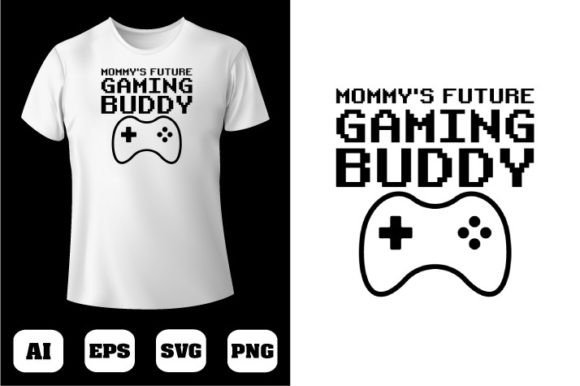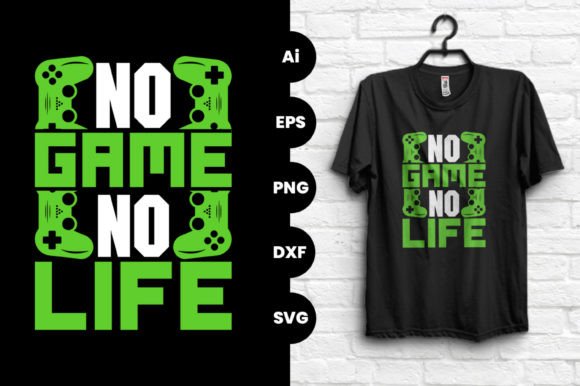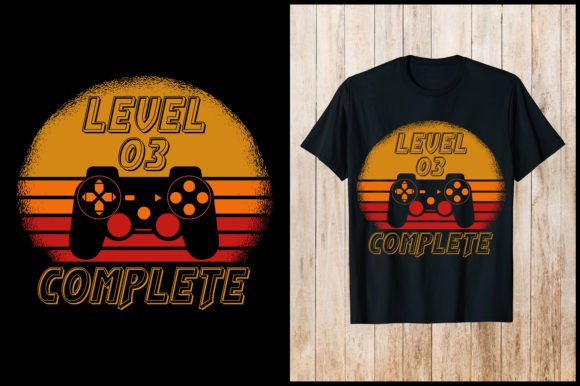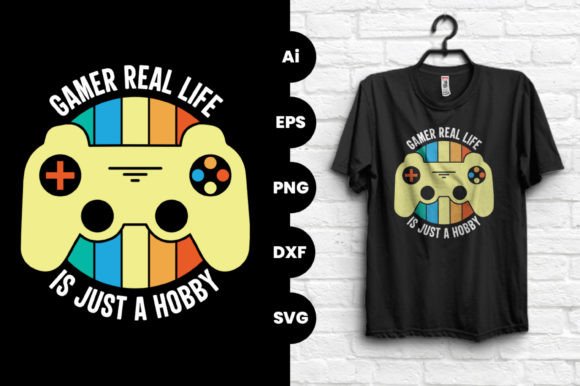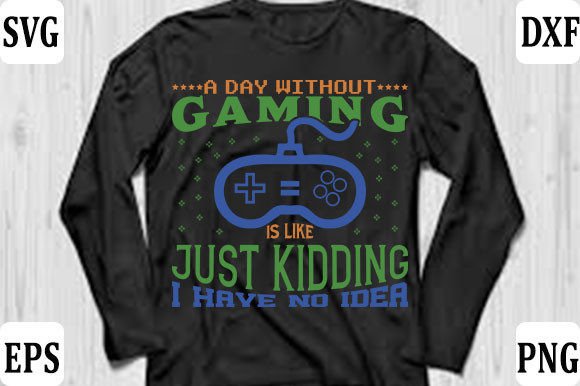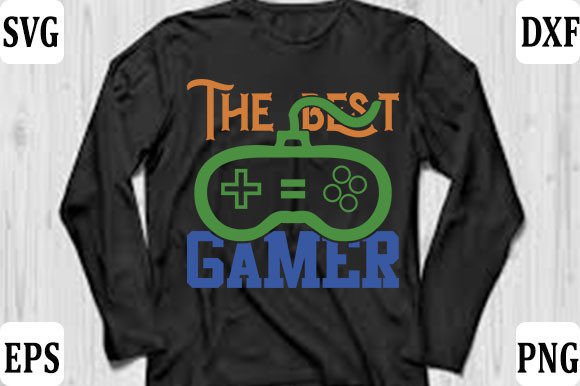
Unpacking Gaming Gamer T-shirt Design, the Best: A Complete Creative Toolkit
Gaming culture has moved far beyond the screen. What was once a niche pastime now shapes mainstream fashion, music, and lifestyle branding. At the center of this shift sits a deceptively simple product: the gamer t-shirt. But not just any graphic. For designers, print-on-demand entrepreneurs, and gaming communities, finding Gaming Gamer T-shirt Design, the Best is about more than a cool image. It’s about versatility, professional output, and a design that speaks without shouting. When you open a well-prepared ZIP file containing EPS, SVG, PNG, and DXF formats, you’re not just buying art — you’re investing in a production-ready asset that adapts to screens, garments, stickers, and beyond.
This article explores why that combination of files matters, how the gamer apparel trend has matured, and what practical steps creatives and business owners can take to make the most of a high-quality design bundle. No overhyped promises. Just a grounded look at what makes a design toolkit genuinely useful in today’s fast-moving creative landscape.
The Quiet Evolution of Gamer Apparel: From Basement to Boutique
Cast your mind back fifteen years. Gamer t-shirts were often freebies — oversized, stiff cotton tees handed out at conventions, emblazoned with aggressive logos or pixelated sprites. They were badges of belonging, but rarely objects of design admiration. Today, the landscape has flipped. Streetwear brands collaborate with esports teams. Luxury houses release gaming-inspired capsules. Independent creators sell limited drops through platforms like Etsy, Shopify, and Redbubble. In this new context, a design must hold its own visually while surviving the technical demands of multiple production methods. That’s where a bundle like Gaming Gamer T-shirt Design, the Best earns its keep.
The modern gamer doesn’t want to be a walking billboard. They want subtle nods, clever typography, retro pixel art, or minimalist controller iconography that fits a relaxed fit tee or a sleek hoodie. This aesthetic maturity pushes designers to craft assets that are sharp, scalable, and emotionally resonant — all while remaining print-friendly. It’s no surprise that interest in vector-based gaming designs has surged among small studio owners, content creators, and screen printers looking to differentiate their catalogs.
Why a Single Design, Multiple File Types, Changes Everything
You might wonder: why does the file format spread matter so much? A JPEG can work for a quick social post, but it falls apart the moment you need to embroider a cap or laser-engrave a phone case. The ZIP package — containing 1 EPS, 1 SVG, 1 PNG, and 1 DXF — answers a whole spectrum of creative and commercial needs. It’s not just a convenience; it’s a strategic asset.
Scalability sits at the heart of this conversation. Raster images like PNG have a fixed resolution. Stretch them too far and they pixelate. Vectors, on the other hand, use mathematical paths that stay crisp whether you’re printing a small chest logo or a full-back design. EPS and SVG files give you that infinite flexibility. The included PNG serves as a ready-to-use preview or web graphic, while DXF unlocks compatibility with cutting machines like Cricut and Silhouette — opening the door to custom vinyl decals, heat-transfer projects, and even etched glassware. In a single download, the design transforms from a t-shirt graphic into a small product empire.
Modern Workflows and the Print-on-Demand Reality
Anyone who has run a print-on-demand store knows that success hinges on minimizing friction. When a customer orders a tee, the design file must meet exact specifications: correct color mode, transparent background, clean edges. An SVG or EPS file slides into Placeit, Printful, or a local screen printer’s workflow without last-minute panic. This reliability matters especially for entrepreneurs who manage dozens of listings simultaneously. They aren’t just buying a picture; they’re buying time, reduced error rates, and professional consistency.
Moreover, many creators and marketers are now repurposing gaming designs across multiple surfaces — tote bags, mouse pads, enamel pins, even Twitch stream overlays. With the EPS and SVG formats, a design can be recolored, resized, and separated for spot-color screen printing with far less manual cleanup. The practical implication for a freelancer or small agency is clear: one solid vector asset can spawn an entire merchandise line without the usual back-and-forth of file conversion.
The Detailed Anatomy of the ZIP Bundle
Let’s walk through each format and its real-world use case. Understanding these isn’t just technical trivia — it’s what separates amateurs from pros when customers or clients ask the hard questions.
- 1 EPS File: The industry standard for professional printing. Encapsulated PostScript holds vector data that large-format printers and RIP software understand natively. When you need to send art to a screen printing shop or a promotional product manufacturer, EPS remains the safest bet. It preserves layer information and can handle complex gradients without surprise banding.
- 1 SVG File: Think of SVG as the web-savvy sibling. It integrates seamlessly with design software like Adobe Illustrator, Affinity Designer, and free tools like Inkscape. More importantly, SVG works fluidly in browser-based platforms, print-on-demand mockup generators, and cutting machine software. It's lightweight, endlessly editable, and future-proof.
- 1 PNG File: A high-resolution raster with a transparent background. Essential for quick online placement — thumbnail previews, social media teases, website mockups. For creators who don’t own vector software, a clean 300 DPI PNG often suffices for direct-to-garment (DTG) printing, provided dimensions are large enough. Yet it’s the combination with vectors that elevates the bundle’s value.
- 1 DXF File: Drawing Exchange Format isn’t just for AutoCAD anymore. Crafters and small-batch producers rely on DXF for automated cutting machines. Load the file into Cricut Design Space or Silhouette Studio, and you can produce heat-transfer vinyl decals, stencils, or paper craft elements. This extends the design’s life into physical goods beyond fabric.
When a designer bundles these four formats together, they acknowledge that the end-user might be a screen printer on Monday, a streamer designing merch on Wednesday, and a hobbyist making a custom laptop skin on Saturday. That kind of thoughtful preparation is what gives Gaming Gamer T-shirt Design, the Best its staying power.
Cultural Shifts Driving Demand for Quality Game-Inspired Tees
We’re in the middle of a broader lifestyle shift. Remote and hybrid work blurred the line between professional dress and personal expression. People want clothing that signals identity without sacrificing comfort. Gaming motifs — controller icons, retro consoles, subtle pixel art — act as a visual shorthand for a generation that grew up with an NES or a Playstation. It’s not about being a “gamer” in the stereotypical sense; it’s about signaling creativity, nostalgia, and belonging to a digitally fluent tribe.
This cultural momentum affects what buyers expect from a t-shirt design. They want graphics that feel intentional, not cheap clipart. They appreciate small details: a clever use of negative space, a controller shaped like a heart, a font that echoes classic game UI. When you tap into that with a design that’s technically robust, you meet the market where it’s headed, not where it’s been. That’s why creators who invest in a solid vector-based gaming graphic aren’t just chasing a trend; they’re building an asset library that can evolve with seasonal color palettes, different garment styles, and new merchandising platforms.
Practical Ways Creators and Businesses Can Apply the Design
Owning the file bundle is step one. The real benefit emerges when you put it into motion. Here are grounded examples of how professionals and hobbyists alike can leverage the design without overcomplicating their workflows.
- Launch a cohesive apparel line: Use the EPS to create consistent placements — left chest, full front, sleeve print. Recolor the SVG for seasonal drops (dusty pink for spring, deep forest for autumn) while keeping the core identity intact. This turns one purchase into months of fresh inventory.
- Develop gaming-themed accessories: Import the DXF into a cutting machine to produce iron-on vinyl patches for denim jackets or backpacks. Cut stencils for spray-painted canvas sneakers. The same design that looks great on a tee becomes a storytelling device across a whole lifestyle product range.
- Enhance digital content: Place the PNG as a watermark-style graphic on YouTube thumbnails or Twitch panels, then use the SVG to create animated badge reveals for subscribers. Because vectors scale, you can output crisp overlays for 4K video without sharpening artifacts.
- Offer custom commissions: Freelance designers can use the base art as a starting point for personalized orders — add a gamertag, change a color scheme, combine elements from multiple designs. Having the editable source files means custom work takes half the time, boosting profitability.
Notice a common thread: flexibility without legal guesswork. Because the bundle includes fully editable vector formats, you’re not locked into a single visual expression. You can iterate while respecting the original composition’s integrity.
What Marketers and Small Business Owners Should Know
If you run a niche apparel brand or a gaming blog that sells merchandise, the technical quality of your design directly impacts customer satisfaction and return rates. A blurry print because the source file was too small leads to refund requests and bad reviews — headaches nobody needs. When you source Gaming Gamer T-shirt Design, the Best as a complete ZIP, you’re essentially future-proofing your product line. EPS and SVG files can be archived and reused years later, even as printing technology evolves. The DXF file adds a crafting dimension that most competitors overlook, giving you a tangible point of differentiation.
From an SEO standpoint, if you’re listing these shirts or digital designs on your own site, describing the technical care behind the product helps with conversion. Phrases like “high-resolution vector included,” “DXF ready for Cricut,” and “fully editable SVG” speak to a segment of buyers who know exactly what they need. It signals authority and reduces pre-purchase doubt. Your product page becomes a resource, not just a sales pitch.
Common Pitfalls to Avoid and Misconceptions
Enthusiasm for gamer t-shirt designs can sometimes outpace technical know-how. One misconception is that a single PNG is enough for everything. While DTG printers can handle PNG files, screen printers often require vector separations. If you plan to scale, starting with vectors saves costly redraws later. Another pitfall: assuming all DXF files are compatible with every cutting machine. The included DXF in this bundle is intentionally streamlined, but it’s wise to test cut on scrap material first and adjust line weights if needed.
Avoid treating the design as a static purchase. The real value lies in how you adapt it. Over-relying on the original colors or layout without experimenting can make your products feel generic. Instead, treat the source files as a creative springboard. That mindset shift separates sellers who blend in from those who build recognizable brands.
The Role of Design Quality in an Oversaturated Market
Walk through any print-on-demand marketplace and you’ll see thousands of gamer-themed shirts. Most rely on similar motifs — headsets, crosshairs, “Level Up” slogans. Standing out requires subtlety. A well-constructed design with clean line art, balanced typography, and a nod to gaming nostalgia without being cliché rises above the noise. When paired with the right blank garment and a thoughtful color story, it becomes something people want to wear repeatedly, not just on tournament day.
This is where the “best” designation carries weight. It’s not about awards; it’s about suitability across multiple real-world scenarios. A design that prints cleanly on a black tri-blend tee, cuts smoothly on adhesive vinyl, and uploads into a mockup generator without artifact issues saves hours of troubleshooting. Those saved hours translate directly into faster time-to-market and more energy spent on marketing, community building, and customer experience.
How Hobbyists and Educators Can Benefit
Beyond commerce, the bundle serves an educational and creative exploration purpose. A high school media teacher can use the SVG file to demonstrate vector editing principles while tying the lesson to a subject students genuinely care about. A hobbyist running a small Etsy shop can test new craft materials — holographic vinyl, flocked heat transfer — using the DXF cut file, learning about material behavior without starting from scratch. In these contexts, the design becomes a learning tool as much as a product asset.
Parents customizing birthday party gear for a gaming-obsessed child find immense value too. Printing the graphic on favor bags, cake toppers, or custom t-shirts transforms a digital file into a memorable, personal experience. The accessibility of the PNG format means even those with minimal tech skills can achieve professional-looking results.
Looking Ahead: The Intersection of Gaming and Custom Fabrication
As home fabrication tools become more common — think desktop vinyl cutters, sublimation printers, and even entry-level laser engravers — the demand for versatile design files will only grow. A DXF file that was once seen as a niche inclusion now opens doors into personalized tech accessories, etched metal tumblers, and custom sneakers. Similarly, the EPS format remains a backbone for large-scale manufacturing, suggesting that a design bundled thoughtfully has a remarkably long shelf life.
We’re not heading into a future where one file type conquers all. Instead, creators who prepare assets for multiple outputs position themselves — and their customers — to move fluidly between digital and physical products. Gaming Gamer T-shirt Design, the Best represents this exact mindset: a practical, forward-thinking package that respects how people actually work today, while leaving room for how they might create tomorrow.
Making the Most of Your Design Investment
Ultimately, the true value of a gaming t-shirt design bundle isn’t measured in megabytes but in opportunities. Whether you’re a seasoned print-on-demand seller, a marketing professional curating a merchandise drop, a blogger expanding into physical products, or a hobbyist looking for a weekend project, the combination of EPS, SVG, PNG, and DXF files puts professional control in your hands. You’re not just buying an image. You’re gaining the ability to produce, adapt, and scale without technical barriers.
Keep the files organized in a dedicated project folder. Document which color profiles work best for your chosen printing method. Test on different garment colors. And most importantly, bring your own creative vision to the design. The gamer in all of us appreciates authenticity. A thoughtful t-shirt — backed by solid production-ready files — is one of the most wearable forms of that truth.