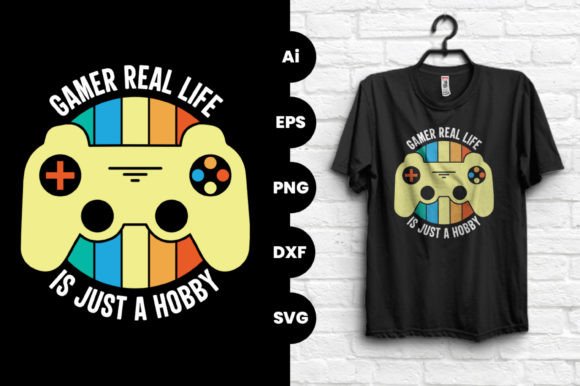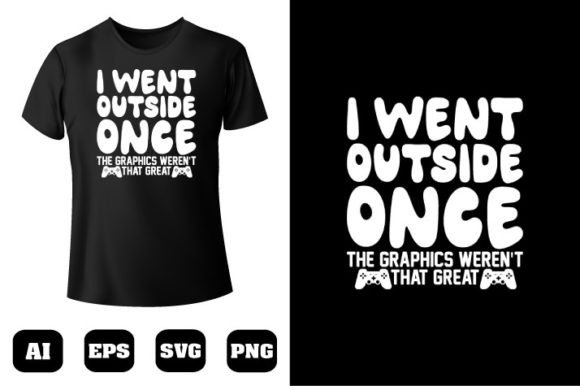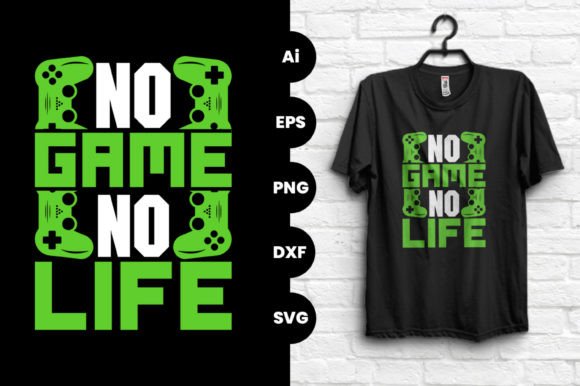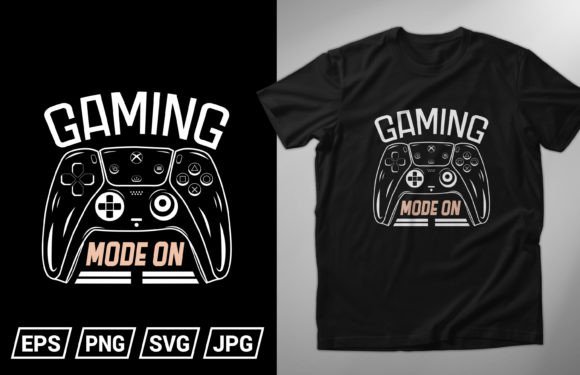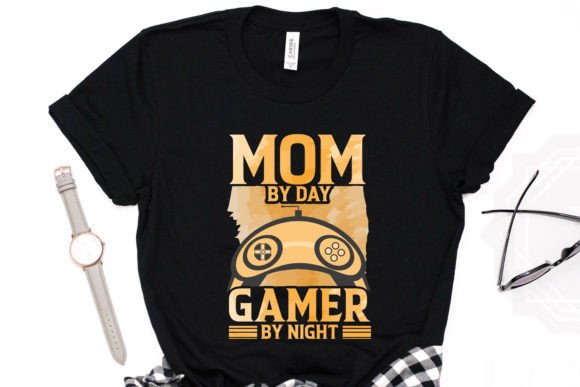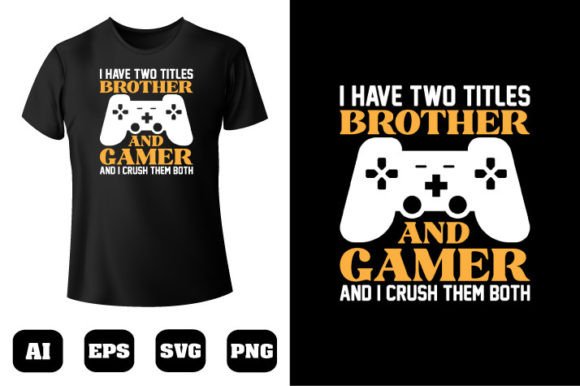
Mastering Your Merch Workflow with Gaming T-shirt Design 112
Every merchandise creator knows the moment when a solid design concept clicks into place. You have the audience in mind, the niche is clear, and the visual language makes sense. What often slows the process down is the technical execution—file formats that refuse to cooperate, resolution issues that surface only after test printing, and colors that look different on screen than they do on fabric. Gaming T-shirt Design 112 addresses these friction points directly by providing a production-ready asset that slots into an existing apparel workflow without requiring hours of troubleshooting.
This particular design belongs to a growing category of gaming-inspired visuals that appeal to streamers, esports enthusiasts, and anyone who identifies with gamer culture. What sets it apart is not just the aesthetic but the underlying file structure. The package includes fully editable vector files in multiple formats, which means the design functions less like a static image and more like a flexible starting point. For someone running a print-on-demand store, managing a local merch brand, or preparing event giveaways, that flexibility translates into fewer revisions and faster turnaround times.
What Gaming T-shirt Design 112 Actually Contains
Before integrating any asset into a production pipeline, understanding exactly what you are working with saves time and prevents costly mistakes. Gaming T-shirt Design 112 arrives as a comprehensive file bundle built in Adobe Illustrator CC. The main working file is an AI document, which serves as the master source. Alongside it, you receive EPS, PNG, and SVG versions. Having all four formats available from the start eliminates the need to convert files manually or compromise on quality when switching between different software environments.
The technical specifications matter because they determine where and how the design can be used. At 300 dots per inch, the resolution meets the standard required by virtually every print-on-demand platform and commercial printing service. Lower resolutions create visible pixelation on fabric, especially on larger print areas. The 300 dpi benchmark ensures that the design translates cleanly to physical products whether it is scaled up for a full-back placement or kept small for a left-chest logo.
Perhaps the most practical feature for iterative work is the 100% color changeable design structure. Every element within the composition can be recolored independently without affecting other layers. This means one design file can generate dozens of color variations tailored to different garment colors, seasonal collections, or team branding needs. The 100% vector nature of the shapes further guarantees that resizing—whether for a toddler onesie or an oversized pullover hoodie—introduces zero quality loss.
Where This Design Fits in a Broader Creative Process
Creating original t-shirt artwork from scratch is a multi-stage process that involves concepting, sketching, digitizing, refining, color testing, and preparing production files. For many small business owners and independent creators, that timeline is not always feasible, especially when responding to trends or fulfilling client requests with tight deadlines. Gaming T-shirt Design 112 functions as a middle-ground solution. It is not a generic template that requires extensive modification to look original, nor is it a completely custom commission that demands weeks of back-and-forth communication with an illustrator.
The design occupies a strategic position in the creation-to-sale pipeline. You might use it as the primary artwork for a new product launch when time is limited. Alternatively, it can serve as a base layer in a more complex composition where you add typography, graphic elements, or brand-specific icons. The editable vector structure supports both approaches equally well. This dual-use capability means the asset remains useful even as your design skills or business needs evolve.
For creators who work across multiple sales channels, consistency becomes a recurring challenge. A design that looks crisp on a Shopify product page might lose detail when uploaded to a marketplace like Etsy or Redbubble if the file was not prepared with cross-platform compatibility in mind. Because the Gaming T-shirt Design 112 bundle includes both raster and vector formats, you can export exactly the version each platform requires without degrading the original quality. The PNG handles quick previews and web listings, while the AI and EPS files go directly to print production.
Practical Integration with Print-on-Demand and Direct Printing Workflows
Print-on-demand services such as Printful, Printify, and Gelato have specific file requirements that, if not met, result in rejected uploads or poor print quality. Most platforms recommend PNG files with transparent backgrounds at 300 dpi, sized appropriately for the print area. The included PNG file in this package already satisfies those criteria, which eliminates a common bottleneck for POD sellers who spend too much time reformatting artwork instead of focusing on product listings and marketing.
For those who handle screen printing or direct-to-garment printing in-house, the vector files provide even more control. Screen printers need color-separated artwork to create individual screens for each ink color. While Gaming T-shirt Design 112 is not pre-separated, the 100% vector and color-changeable structure makes separation work significantly faster. Each color can be isolated, assigned to its own layer, and exported as a separate plate. This alone can cut prepress time by a considerable margin compared to working with flattened raster images.
The SVG format deserves special attention because of its growing importance in digital-first merchandise workflows. SVG files integrate smoothly with cutting machines like Cricut and Silhouette, opening up product categories beyond traditional t-shirts. You can apply the same design to heat-transfer vinyl applications on hats, bags, and jackets. The format also works well for sublimation printing setups, where designs are transferred onto polyester fabrics and coated hard goods through heat pressing.
Organizing Your Design Assets for Long-Term Efficiency
One habit that separates productive merch creators from those who constantly reinvent the wheel is systematic asset organization. When you acquire a design bundle like Gaming T-shirt Design 112, taking a few minutes to establish a clear folder structure pays dividends later. Create a master folder named after the design, then subfolders for each file format: AI, EPS, PNG, SVG. Keep the original files untouched and make duplicates for active projects. This prevents the classic mistake of overwriting the master file with a project-specific edit and then needing the original version for a different application.
Naming conventions also matter more than they might seem at first glance. A file named "gaming-tshirt-design-112-master.ai" is instantly searchable six months later when a client requests a reprint or a variation. Compare that to a vague name like "final-version-3-edited.ai," which creates confusion and wasted time. Establish a consistent naming pattern early and apply it across all design assets, not just this one. The discipline scales well as your library grows.
Color management is another organizational consideration. The 100% color-changeable feature means you can produce numerous color variants rapidly, but without a system to track which combinations work best on which garment colors, you may find yourself repeatedly testing the same adjustments. A simple tracking document—whether a spreadsheet or a note in your project management tool—that records successful color pairings speeds up future product launches. Note the hex codes, the garment color it was printed on, and any observations about how the final product looked. Over time, this becomes a valuable reference that shortens the design-to-listing cycle.
Quality Control Before Hitting the Publish Button
Even with a production-ready file, a few verification steps prevent disappointing outcomes. Open the AI file in Adobe Illustrator and confirm that all text—if any exists—has been converted to outlines. This ensures that fonts render correctly on any system, even if the printer does not have the typeface installed. Review the design at actual print size, zooming in to check for unintended gaps between vector shapes or thin lines that might not hold up well in screen printing. Thin lines below one point in stroke weight can become fragile on screens and may wash out over repeated laundry cycles.
Test the color change feature by selecting a few elements and applying drastically different colors. This confirms that the file is structured correctly and that no elements are locked or grouped in unexpected ways. If you plan to offer multiple colorways in your store, generate all the variants in one session while the design logic is fresh in your mind. Export them in batches, label each file clearly, and upload a test print to your chosen platform before listing the product publicly.
Leveraging Gaming T-shirt Design 112 Across Multiple Revenue Streams
A single t-shirt design can support more than one product listing. The same visual can be placed on hoodies, crewnecks, long-sleeve tees, tank tops, and youth sizes with minimal additional effort. Because the vector structure supports non-destructive resizing, adapting the design from a standard adult t-shirt print area to a smaller youth placement or a larger hoodie back print requires only a few scaling adjustments.
Beyond apparel, the design can extend into digital products. Twitch streamers and YouTube creators often need overlay graphics, alert animations, and channel art that match their brand aesthetic. While the PNG version of Gaming T-shirt Design 112 is optimized for print, it can also be imported into streaming software like OBS or Streamlabs as a static overlay element. The SVG format can be brought into motion graphics tools for simple animations. This cross-medium flexibility increases the value of the asset beyond the initial t-shirt application.
For those who offer custom design services to clients, having a library of licensable base designs accelerates project delivery. When a gaming organization or a local esports team approaches you for merch, presenting variations built on Gaming T-shirt Design 112 allows you to show concrete concepts within the first meeting. Clients respond more favorably to tangible visuals than to abstract descriptions, and the ability to demonstrate immediate progress often strengthens the working relationship and shortens the approval cycle.
Staying Current While Maintaining a Cohesive Brand Identity
Gaming culture evolves steadily, and visual trends shift along with it. What remains constant is the demand for designs that feel authentic to the community. Gaming T-shirt Design 112 captures a particular aesthetic that resonates without leaning too heavily on fleeting meme references or licensed characters that carry legal risks. This positions the design as a relatively evergreen option within a niche that can sometimes feel trend-chasing.
Designers and brand owners who follow the creator of this design gain access to additional assets that share a compatible visual language. Building a collection from the same source creates a cohesive catalog where products feel related rather than randomly assembled. This consistency builds buyer trust, especially for repeat customers who come to expect a certain quality and style from your store. When new designs are released that match the aesthetic of Gaming T-shirt Design 112, you can add them to your lineup with confidence that they will integrate visually with existing products.
Making the Most of the Included File Types
Each file format in the bundle serves a distinct purpose, and understanding when to use each one optimizes your workflow. The AI file is the editing powerhouse. Open it in Adobe Illustrator CC to access every layer, every vector shape, and every color adjustment. This is where you make significant modifications, create color variations, and prepare separation files for screen printing. The EPS file functions similarly but with broader compatibility across vector editing software, including CorelDRAW and Affinity Designer, making the design accessible to users who do not use Adobe products.
The PNG file addresses immediate web and mockup needs. Its transparent background means it can be dropped directly onto product mockup templates without additional background removal. Use it for store listings, social media previews, and client presentations. The SVG file bridges the gap between print and digital, supporting web use, cutting machines, and vector-based web graphics where small file size and infinite scaling are priorities.
Investing time in learning the strengths of each format pays off in operational speed. Many sellers operate entirely from the PNG file and never explore the vector versions, leaving significant editing potential untapped. Spending even thirty minutes familiarizing yourself with the AI file's layer structure and color editing capabilities can transform how you approach product variations going forward.
Building a Sustainable Merchandise Operation Through Smart Sourcing
Sourcing designs strategically contributes to a sustainable business model more than constant custom commissioning does. Custom artwork carries higher upfront costs and longer timelines, which makes it less practical for testing new niches or responding to seasonal opportunities. Ready-to-use designs like Gaming T-shirt Design 112 fill the gap between generic clip art and fully custom work. They provide enough originality to stand out while keeping the cost per design low enough to allow experimentation.
This does not mean abandoning custom work entirely. Rather, it means being selective about where custom resources are allocated. Use purchased designs to maintain a steady release schedule and generate consistent revenue, then invest those earnings into custom pieces for flagship products or high-potential niches. The approach balances creative ambition with practical business management.
The creator of Gaming T-shirt Design 112 also encourages following for more unique designs, which creates a pipeline for future assets that already align with your established visual direction. This ongoing relationship with a consistent design source reduces the time spent searching for new artwork and allows you to plan product releases around a predictable inflow of compatible designs.