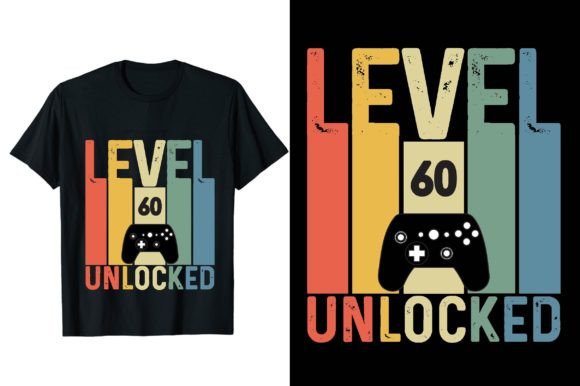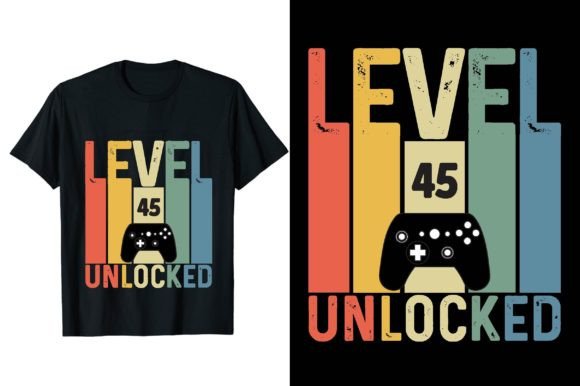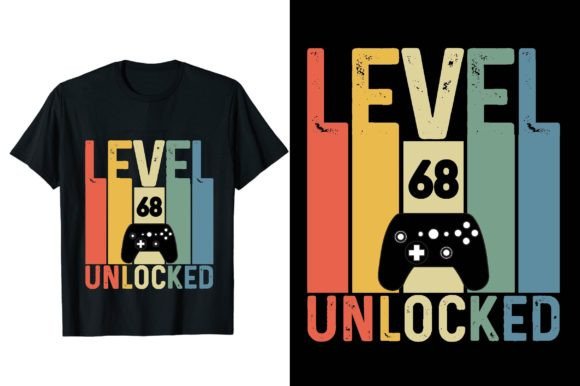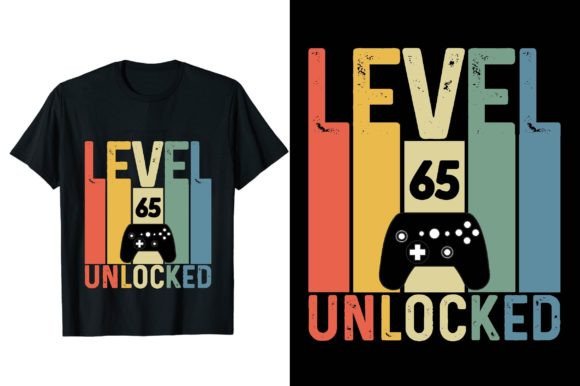
Level 41 Unlocked: Turning a Gaming Milestone Into a Wearable Statement
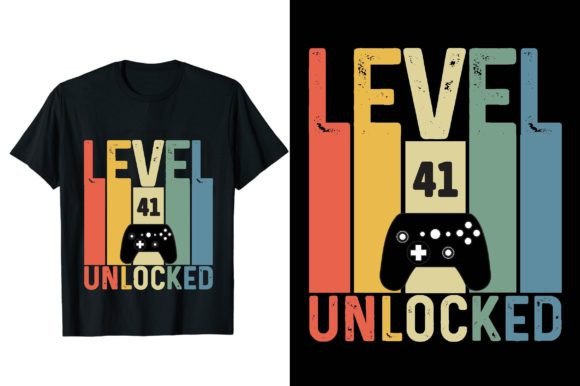
There is something quietly satisfying about hitting a milestone that no one else sees. A level-up notification flashes across the screen, a number increments, and the moment passes. The “Level 41 Unlocked” gaming T-shirt design takes that invisible achievement and makes it tangible. It is not just a graphic; it is a marker of progress, a nod to the hours spent grinding, learning mechanics, and pushing through difficulty spikes. For gamers who have moved past the early-game rush and settled into the long middle stretch of a journey, level 41 represents persistence more than novelty. The design captures that exact sentiment.
This specific artwork arrives as a digital download package, which means you receive the source files and can deploy them across an entire range of physical and digital goods. The package includes an AI file, an EPS file, an SVG file, and a high-resolution PNG. No physical product ships to your door. You get the building blocks, and the output is entirely yours to decide. That structure changes how the design fits into creative workflows, small business operations, and personal projects. You are not buying a shirt. You are buying the ability to make shirts, hoodies, mugs, stickers, wall art, blankets, pillows, and more on your own timeline, with your own production method.
What the Design Actually Represents
Level 41 is not a beginner number. It sits well past the tutorial phase and beyond the early milestones that games hand out generously. By the time someone reaches level 41, they have made real investments in time, attention, and strategy. The design speaks to that quiet confidence. It works because it does not need to explain itself to outsiders. Fellow players recognize the language immediately. Non-gamers simply see bold typography and a clean lockup. That dual readability makes it versatile for merchandise aimed at niche communities and broader audiences alike.
The artwork itself is structured for easy editing. Because vectors are included, you can resize without degradation, recolor for different garment types, isolate elements, or combine the graphic with other assets in your own compositions. For anyone who has worked with raster-only files that pixelate the moment you scale up for a large print, the inclusion of SVG, AI, and EPS formats removes a significant friction point. You can take the design from a laptop screen to a DTG printer, a screen printing setup, a sublimation press, or a Cricut cutting machine without format conversion headaches.
Where This Design Fits Into a Creative or Business Workflow
If you sell print-on-demand products, the PNG file is your fastest path to listing a new item. Download the design, upload it to your platform of choice, place it on a mockup, and publish. The process from acquisition to live listing can take under an hour. That speed matters when you are managing dozens or hundreds of SKUs and need fresh designs to test against audience preferences.
If you run a small-scale production operation with a heat press or screen printing setup, the vector files become your working documents. You can separate colors, adjust line weights for different mesh counts, or scale the artwork for everything from a left-chest print on a polo to an oversized back graphic on a hoodie. The AI and EPS formats are native to industry-standard design software, so your existing workflow does not need to change.
For personal projects, the same files let you create one-off gifts, event apparel for a gaming group, or custom items for a birthday or tournament. You might print a single onesie for a gamer parent welcoming a new arrival, or produce matching tank tops for a summer LAN party. The design does not lock you into a single product category, and the file formats do not lock you into a single production method.
Practical Integration with Printing Methods and Platforms
Different printing technologies have different requirements. Direct-to-garment printing handles full-color PNGs directly and works well for on-demand fulfillment. Screen printing often requires vector separations, spot color assignments, and careful trapping. Sublimation printing on polyester fabrics and hard goods demands high-resolution artwork that can withstand heat transfer without color shift. The multi-format package covers all of these scenarios without forcing you to rebuild the artwork from scratch.
Compatibility extends to editing software as well. Adobe Illustrator opens the AI and EPS files natively. Affinity Designer, CorelDRAW, Inkscape, and other vector editors can import or open the SVG and EPS formats. Even basic programs like Canva accept SVG uploads, though you may lose some layer structure. If your workflow relies on free or low-cost tools, the SVG file gives you a path forward that does not require an Adobe subscription.
Using the Design Before, During, and After a Project
Timing matters when you integrate a purchased design asset. Before a project launches, the design serves as a visual reference. You can test it on mockups, run it past collaborators, or use it in pre-sale campaigns to gauge interest before committing to bulk production. Because you own the files, there is no licensing clock ticking down, and no usage cap that restricts how many units you can produce.
During active production, the editable vectors let you make adjustments on the fly. If a print provider specifies a maximum design width or a required bleed area, you can resize without losing fidelity. If a customer requests a color variation, you can recolor elements in minutes rather than sending revision requests back to a designer. That responsiveness improves delivery speed and reduces back-and-forth communication.
After a project wraps, the files remain in your asset library. You can repurpose the design for future collections, seasonal promotions, or entirely new product categories. A design that starts on a T-shirt can later appear on a mug, a phone case, a throw pillow, or a framed art print. The value of a digital asset compounds when you treat it as a reusable component rather than a single-use purchase.
Organizing Your Design Assets for Long-Term Use
Digital downloads accumulate quickly. Without a system, you end up with folders full of files you cannot find when you need them. A practical approach starts with a consistent naming convention. Instead of leaving the file as design-package.zip, rename the folder to include the design name, the license type if applicable, and the date of acquisition. Inside, keep the original ZIP as an archive and extract working copies into a project folder when you start a new production run.
Store vector files separately from raster exports. Tag designs by theme, product category, or intended audience. If you maintain a digital asset management tool or even a simple spreadsheet, log which designs have been used on which products, which have sold well, and which are still waiting for their first production run. The Level 41 Unlocked design fits naturally into a category of milestone markers, gamer culture graphics, and typographic statements. Grouping it alongside similar assets makes it easier to create cohesive collections later.
Quality Control Considerations
Before sending any file to production, check the resolution, color mode, and scale. The included PNG is high-resolution, but confirm that it meets the DPI requirements of your specific printer. Some print-on-demand platforms generate warnings or auto-reject files below a certain threshold. Vector files bypass resolution concerns entirely, but they still require color checks. If your production workflow uses CMYK rather than RGB, open the vector in your design software and adjust the color profile before export. A design that looks vibrant on screen can print dull if the color space is not converted properly.
Test on a single item before committing to a full run. Print a sample T-shirt, press a single mug, or cut one sticker. Check alignment, color accuracy, and overall visual impact. The design is complete and production-ready out of the package, but your equipment, materials, and settings introduce variables that only a physical test can surface. That small investment in quality control prevents wasted blanks and disappointed recipients.
Expanding the Design Across Product Categories
The versatility of a clean graphic like Level 41 Unlocked extends well beyond apparel. On drinkware, the design reads clearly at smaller scales and adds personality without overwhelming the product. On wall art or canvas prints, it becomes a statement piece for a game room or streaming backdrop. Stickers and decals let customers apply the graphic to laptops, water bottles, car windows, or console cases. Each new product category represents a separate revenue stream or gifting opportunity from a single design file.
Consider the context of each product. A onesie with this design plays on the humor of a baby leveling up through early milestones. A hoodie feels like a reward for a long grind. A framed print turns a personal achievement into permanent decor. Matching the product to the emotional tone of the design strengthens the end result. The design itself does not change, but the meaning shifts depending on where it lives.
Editing and Customization Without Starting Over
The editable nature of the provided files means you are not stuck with the default layout. You can add a player name, a clan tag, a date, or a custom message beneath the main graphic. You can change the color palette to match a team identity or an event theme. You can crop, mask, or blend the design with other elements for composite artwork. Because the source files are layered where appropriate, selective editing is faster than working with a flattened image.
This flexibility matters for businesses that want to offer personalized products without commissioning new artwork for every order. A customer requests their gamer tag on the back of a shirt, and you can add it in minutes. Another wants the design in neon green on a black hoodie, and you recolor and export without touching the composition. The initial purchase covers all of these iterations, and the absence of per-use licensing fees keeps margins predictable.
Who Benefits Most From This Approach
Print-on-demand sellers gain a tested, niche-relevant design that targets a specific segment of the gaming audience. The language of level unlocks resonates with RPG players, MMO veterans, battle pass grinders, and anyone who tracks progress numerically. It is not generic gamer clipart. It speaks a specific dialect that the target audience recognizes and responds to.
Hobbyists and makers gain a project-ready file that works with home equipment. Heat press owners can print on demand for friends and family. Cricut and Silhouette users can cut heat transfer vinyl versions for custom apparel. Sublimation crafters can press the design onto mugs, coasters, and polyester fabrics. The multi-format package ensures that no matter which toolchain you use, at least one included file will slot into your workflow without conversion gymnastics.
Content creators and streamers can use the design on merchandise sold to their communities, or incorporate it into channel art, emotes, overlays, and subscriber rewards. The vector files scale to banner dimensions and thumbnail sizes alike. A consistent visual identity built around milestones and progression aligns well with content that tracks growth, rank, or achievements over time.
Making the Most of Instant Download Digital Assets
Instant download means you receive the files immediately after purchase. No shipping delays, no physical inventory to manage, no minimum order quantities. That immediacy supports just-in-time production models. You can list a product in the morning, receive an order by afternoon, and send it to production the same day without waiting for design assets to arrive. For time-sensitive projects like event merchandise or holiday gifting, the speed advantage is significant.
Keep backups of your purchased designs in at least two locations. A local drive and a cloud storage service provide redundancy. Losing a single PNG is recoverable from the vector source, but losing the entire package means repurchasing or rebuilding from scratch. Treat digital assets the same way you treat critical project files, because they serve the same function in a production pipeline.
The Level 41 Unlocked Gaming T-shirt Design package delivers more than a graphic. It delivers a flexible, production-ready asset that integrates into print workflows, creative projects, and product catalogs without friction. The formats cover the major use cases. The subject matter connects with an engaged audience. The editable structure supports customization, scaling, and long-term reuse. Whether you are printing one shirt for yourself or building a product line around gamer milestones, the process starts the same way: download, open, and create.