Evaluating the Wild West Individual Image Clip Art Set for Your Creative Projects
Digital artists, educators, game developers, and graphic designers often find themselves searching for period-specific visuals that capture the rugged spirit of the American frontier. A collection like the Wild West Individual Image Clip Art Set promises to fill that gap by offering ready-to-use building illustrations rooted in Old West architecture. Understanding what this set provides, where it performs well, and where you might need something different can help you decide if it matches the direction of your current or upcoming work.
What the Collection Actually Contains
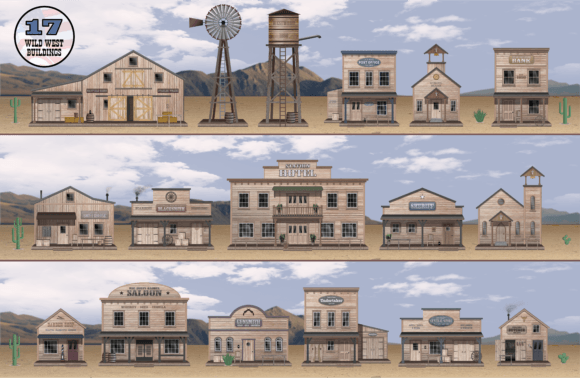
At its foundation, this set delivers 17 individual digital images depicting Wild West buildings. Each file is formatted as a PNG with a transparent background and produced at 300 DPI. This technical specification matters because it influences how and where the images can be used without degradation. Transparent backgrounds mean you can layer a saloon, general store, or sheriff's office onto existing compositions without manually removing backdrops. The resolution supports both screen-based projects and print materials up to a reasonable scale.
The subject matter centers on authentic Wild West digital building images that evoke the architectural character of frontier towns. Rather than generic structures, the images aim to reflect the distinctive false-front facades, wooden boardwalks, and rustic details associated with the period. For anyone tasked with visually communicating the Old West, these specifics can reduce the time spent searching for or drawing individual buildings from scratch.
Who Benefits Most from Ready-Made Frontier Imagery
Several groups of creators frequently encounter the need for this exact type of visual asset. Digital illustrators building composite scenes benefit from being able to drop in a historically styled structure and then build a narrative around it. Graphic designers working on event posters, flyers, or themed promotional materials gain access to elements that immediately signal the era without requiring custom illustration work. The same logic applies to social media content creators who need eye-catching, thematic graphics for campaigns, announcements, or storytelling series.
Game developers and animators represent another segment with a clear use case. When prototyping or producing indie projects with a Western setting, environment art can consume enormous amounts of time and budget. Pre-made building images can serve as placeholders during development or, depending on the project's visual style, as final assets in 2D games and animated sequences. Educators and curriculum designers also find value in such images for constructing visually engaging history materials that help students picture what a frontier town actually looked like.
Strengths and Practical Advantages
One immediate advantage of the Wild West Individual Image Clip Art Set is the consistency it brings to a project. All 17 images share a unified artistic style, which removes the challenge of trying to match disparate sources that may clash in tone, lighting, or level of detail. This internal coherence saves significant editing time and yields a more professional final result.
The PNG format with transparency offers substantial flexibility. You can position buildings on various backgrounds, layer them with foreground elements, or combine multiple structures to create an entire streetscape. The 300 DPI resolution means you are not constrained to digital-only output. Printed posters, merchandise mockups, and educational handouts remain crisp and detailed. For digital scrapbooking and memory albums, the transparent backgrounds let images integrate smoothly with photographs, textures, and other decorative elements.
Another practical benefit lies in immediate availability. Custom illustration work involves briefs, revisions, and waiting periods. A downloadable set provides instant access, which matters when deadlines are tight or when you are experimenting and need to see results quickly. The range of usage scenarios also adds perceived value. From custom T-shirt designs and mug prints to website banners and animated shorts, the same purchase can serve multiple channels over time.
Tradeoffs and Limitations to Consider
Evaluating any digital asset honestly means looking at what it does not offer. A set of 17 images, while useful, represents a finite library. If your project demands dozens of unique structures or highly specific building types not included in the pack, you may quickly exhaust the available options. You would then need to supplement with additional resources, commission original work, or accept some repetition within your scenes.
The fixed artistic style, while an advantage for consistency, can become a limitation if it does not align with your broader visual direction. A product with a stylized, illustrated look will not blend well with photorealistic elements or drastically different art styles. Before committing, reviewing sample images or previews helps determine whether the aesthetic complements or conflicts with your existing assets.
Exclusivity is another consideration. Because the set is commercially available, other creators may use the same images in their own work. For highly differentiated branding or unique intellectual property, this can be a drawback. Custom-commissioned art provides exclusivity but at a significantly higher cost and with longer timelines. The tradeoff between uniqueness and affordability sits at the heart of many asset purchasing decisions.
Comparing the Set to Alternative Approaches
When deciding on visual assets, you are essentially choosing between three paths: purchasing pre-made clip art, commissioning original artwork, or creating everything yourself. The Wild West Individual Image Clip Art Set occupies the first path. It trades some uniqueness for affordability and speed. For many solo creators, small studios, and educators, this tradeoff makes practical sense because the time and money required for custom art exceed the available resources.
Commissioning original illustrations gives you full creative control and exclusive ownership. If you are building a brand around a specific Western character or location, or if your project requires highly specific architectural details, custom work may be the better long-term investment despite the higher upfront cost.
The do-it-yourself approach offers maximum control but demands skill, software, and significant time. Even experienced illustrators sometimes purchase asset packs to accelerate workflow, using them as starting points that they modify and adapt rather than drawing every element from a blank canvas. This hybrid method can leverage the strengths of a clip art set while mitigating some of its limitations through customization.
Key Decision Factors for Your Project
Determining whether this set aligns with your goals involves assessing several practical factors. First, consider the visual style of your project. Are you aiming for a cohesive illustrated look, or does your work mix photography with digital elements? Transparent-background PNGs work well in layered compositions, but only if the base art style harmonizes with your other components.
Next, evaluate the volume of assets you need. Seventeen buildings may be ample for a focused project like a themed poster, a short animation, or a set of educational slides. For an expansive game world or a large-scale narrative project, you might need to supplement heavily. Think about your total number of required scenes and how many unique structures each scene demands.
Think about the output medium. Print projects require sufficient resolution, and 300 DPI meets that threshold for most applications. Digital projects can scale images down without quality loss. If you intend to use these images on merchandise, confirm that the licensing terms permit such use, as commercial applications can vary between asset providers.
Finally, weigh the time versus money equation honestly. If your deadline is measured in days rather than weeks, or if you need to prototype multiple concepts before settling on a direction, ready-made assets provide a practical on-ramp. If you have more time and need guaranteed originality, other avenues may serve you better.
Situations Where the Set Is a Strong Fit
Several scenarios clearly favor using this collection. Educational content creation is one. History teachers and curriculum developers often need engaging visuals to capture student attention. The buildings in this set can illustrate frontier life, support storytelling, and anchor lesson materials without the teacher needing artistic skills or a budget for custom illustrations.
Small business marketing with a Western theme also aligns well. A restaurant, event venue, or retail shop running a frontier-themed promotion can use these images for social media graphics, flyers, and digital signage. The cost remains low, and the thematic consistency helps reinforce the campaign identity across different platforms.
Independent game development and hobbyist animation projects benefit similarly. Prototyping environments, testing scene compositions, and even shipping small 2D games can happen faster when environment assets are available off the shelf. The transparent backgrounds make it straightforward to integrate buildings into game engines that support PNG sequences or sprite-based rendering.
Digital scrapbookers and memory keepers represent an often-overlooked group that finds genuine value in themed clip art. Family trips to Western historical sites, reenactment events, or cowboy-themed parties can be documented with decorative elements that match the subject matter, creating cohesive album pages that feel intentional and polished.
When Alternatives May Be Worth Considering
There are situations where looking beyond a pre-made clip art set becomes necessary. Large-scale commercial projects aiming for a distinctive visual identity often require original art to avoid the risk of looking similar to other products that used the same assets. If your project's success depends on standing out in a crowded market, the investment in custom illustration can pay dividends through brand differentiation.
Projects with very specific architectural or historical accuracy requirements may also need alternatives. While the set aims for authenticity, academic publications, museum exhibits, or historically rigorous documentaries might need structures based on specific reference photographs or detailed research. In such cases, working with an illustrator who can incorporate precise historical details becomes essential.
Teams that need extensive asset variation, including different seasons, times of day, or states of wear and disrepair, will likely find a static 17-image set too constraining. Generating variations from existing clip art can be done, but it requires additional editing expertise and may produce inconsistent results compared to assets created with variation from the outset.
Making a Clear-Eyed Choice
The Wild West Individual Image Clip Art Set offers a practical solution for a range of creative needs centered on frontier aesthetics. Its value proposition rests on convenience, technical quality, and thematic focus. The 300 DPI resolution and transparent PNG format meet professional standards for many uses, while the curated selection of 17 building images reduces the friction of gathering period-appropriate visual references.
What the set cannot provide is unlimited variety or exclusive originality. Recognizing that boundary lets you make an informed choice rather than an aspirational one. If your project sits within the sweet spot of illustration, education, light commercial use, or hobbyist creation, the set can slot neatly into your workflow. If your ambitions push further toward large-scale exclusive content or highly specialized historical representation, then consider it a possible starting point or supplementary resource rather than a complete solution.
Ultimately, the decision turns on matching the asset's characteristics to your project's actual needs, not hypothetical possibilities. By examining your visual style requirements, volume expectations, output goals, and timeline constraints, you can determine where this set belongs in your creative toolkit.